PROFESSIONAL HEATER DIAGNOSTICS
Get your pool and spa back to a comfortable temperature.
A heater that won’t fire, shuts off early or runs without warming the water can take your pool out of use for the season you bought it for.
YardSpring Pools provides swimming pool heater repair for residential gas heaters and heat pumps throughout North Atlanta. We look at the heater, the water flow feeding it and the controls around it, then explain what failed and what it will take to fix it.
Cartridge Filters
💧
DE Filters
💧
Sand Filters
💧
Filter Condition Checks
💧
Cartridge Filters
💧
DE Filters
💧
Sand Filters
💧
Filter Condition Checks
💧
YOUR HEATING SYSTEM
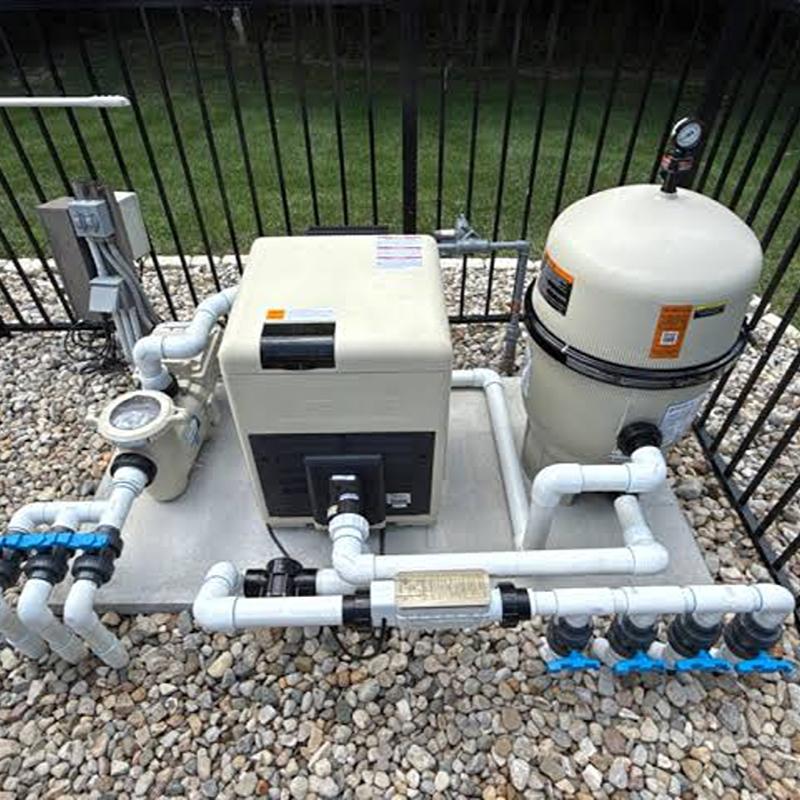
A pool heater only works when everything around it does its part. It needs steady water flow from the pump, a clean path through the filter, the right gas or electrical supply and a control system telling it when to run.
When one of those pieces fails, the heater often gets the blame. A weak pump can trigger a flow error. A loaded filter can cause the heater to shut down. A sensor fault can stop a perfectly good burner from lighting.
That is why we test the whole heating circuit before replacing any part. You pay for the repair the heater actually needs, not a guess.
KNOW THE WARNING SIGNS
Most heater problems show up as one of a handful of symptoms. Each one can have more than one cause, so the symptom is where diagnosis starts, not where it ends.
The display is blank, or the heater tries to start and never lights. Causes range from power or gas supply to ignition parts, safety switches and controls.
The heater sounds normal, yet the pool never reaches the set temperature. Flow problems, scale in the heat exchanger or an incorrect setting are common reasons.
Codes point to a fault category such as flow, temperature, ignition or pressure. They narrow the search, but the code alone is not the full diagnosis.
A heater that starts and stops repeatedly is often reacting to a safety limit. Low flow, overheating or a failing switch can all trigger it.
Banging, whistling, a rotten-egg smell or black soot around a gas heater need prompt attention. If you smell gas, turn the heater off, leave the area and call your gas utility.
Water under the heater or rust on the cabinet can point to a failing heat exchanger, fittings or seals. Unbalanced water chemistry often plays a part.
HEATING SYSTEM EXPERIENCE
Gas heaters and heat pumps warm water in very different ways, so they fail in different ways too. We match the diagnosis to the system you have.
Natural gas and propane heaters burn fuel to heat water as it passes through the heat exchanger. They heat quickly, which makes them common on pools with attached spas.
Repairs usually involve the parts that light and control the flame, or the heat exchanger that carries the water.
✓
Ignition and flame-sensing problems
✓
Gas valve and supply issues
✓
Heat exchanger scale, leaks or soot
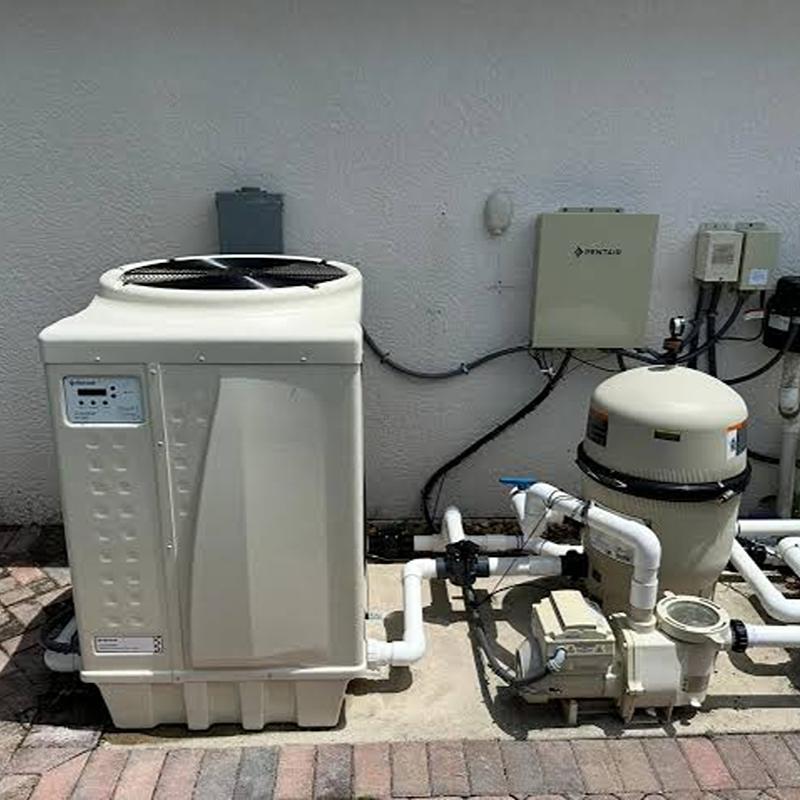
Heat pumps pull warmth from the outside air and transfer it to the pool water. They heat more gradually and depend on airflow, refrigerant pressure and the fan.
When a heat pump runs but stops warming the water, the cause is often airflow, a pressure fault or a failing component in the refrigeration side.
✓
Fan, airflow or coil problems
✓
High or low refrigerant pressure faults
✓
Frozen coils or defrost problems in cooler weather
Many North Atlanta pools share one heater between the pool and an attached spa. Valves and controls decide where the heated water goes.
If the spa won’t heat but the pool does, or the reverse, the problem may be valve position, actuators or control settings rather than the heater itself.
✓
Spa heating slowly or not at all
✓
Valve actuators not switching
✓
Pool and spa modes not responding
HOW WE FIND THE PROBLEM
The steps depend on whether you have a gas heater or a heat pump, but the goal is the same: find the failed part before anything is replaced.
We start with what you have noticed, any codes on the display and how the heater is set up for your pool and spa.
We look at pump operation, filter condition and valve positions, because most heaters will not run safely without enough flow.
We confirm the heater is getting the power, gas supply and control signals it needs, including automation settings where you have them.
Depending on the unit, that can include ignition parts, sensors, switches, the heat exchanger, the fan and refrigerant pressures on a heat pump.
We tell you what failed, what the repair involves and whether repairing the heater still makes sense compared with replacing it.
REPAIR OR REPLACE?
Repair is usually the right call when the heater is in sound overall condition and the failure is a replaceable part, such as an igniter, sensor, switch, control board or fan motor.
Replacement may make more sense when:
✓
The heat exchanger is badly corroded, cracked or leaking
✓
Repairs keep coming back season after season
✓
Parts are no longer available for the model
✓
The repair cost is close to the cost of a new heater
✓
The heater no longer heats the pool the way you need it to
We give you an honest recommendation either way. If replacement is the better value, we can help you choose and install the right system.
LOCAL HEATING DEMANDS
Many North Atlanta homeowners lean on their heaters in spring and fall to open the pool earlier and close it later, and spa owners use them year-round. That is often when a heater that sat idle all summer shows its first problem.
Pollen, leaves and storm debris can also load filters and baskets, which cuts the water flow a heater depends on. Checking the whole system first keeps a simple flow issue from turning into an unnecessary heater repair.
UNDERSTANDING YOUR HEATER
Every manufacturer uses its own codes, but most fall into a few groups. Knowing the group helps explain why we test more than one part.
Common error code groups include:
✓
Low flow or water pressure switch faults
✓
High-limit or overheating shutdowns
✓
Ignition or flame-sensing failures
✓
Temperature sensor faults
✓
Gas supply or gas valve faults
✓
High or low refrigerant pressure faults on heat pumps
Resetting a heater that keeps throwing the same code rarely fixes the cause. Note the code, take a photo of the display if you can and share it when you request service.
THE SYSTEM WORKS TOGETHER
Heaters need a minimum flow to run. A pump running too slowly, losing prime or wearing out can shut the heater down even when the heater itself is fine.
A loaded filter restricts the water reaching the heater. If buildup is the cause, Pool Filter Cleaning may solve the heating problem without a heater repair.
Valve positions, a stuck bypass or incorrect automation settings can send water around the heater or tell it not to run. We check these before condemning any heater part.
HELP YOUR HEATER LAST
The heat exchanger is one of the most expensive parts of a pool heater, and water chemistry has a direct effect on it. Water that is too acidic can corrode it, while scale-forming water can coat it and cut heating performance.
Regular service keeps chemistry in range and gives a technician the chance to notice changes in the heater, pump and filter before they become a breakdown. It does not replace a proper diagnostic when something has already failed.
If you would like ongoing help looking after the whole pool, our weekly service covers water care and equipment checks.
WHY ACT EARLY?
A quick diagnosis means fewer cold swims and less lost pool and spa time.
Testing first keeps you from paying for parts that were never the problem.
Catching flow, chemistry or overheating issues early helps protect the heater’s most costly part.
A clear diagnosis tells you whether a repair or a replacement is the better value.
WHEN TO CALL YardSpring Pools
Request pool heater repair if:
✓
Your heater won’t turn on or won’t light
✓
The water isn’t reaching the set temperature
✓
An error code keeps coming back after a reset
✓
The heater shuts off or cycles on and off
✓
You notice leaks, rust, soot or unusual noises
✓
Your spa is heating slowly or not at all
Tell us the heater type, brand and any error code if you know them. Please don’t open the heater cabinet or work on gas or electrical connections yourself.
THE YARDSPRING POOLS APPROACH
YardSpring Pools looks at your heater as part of the full pool system. We check flow, controls, fuel or power and the heater itself before recommending anything.
Then we explain what we found in plain language. If a part needs replacing, we tell you which one and why. If the heater has reached the end of its life, we say so and walk you through the options.
North Atlanta HEATER REPAIR
YardSpring Pools provides residential pool heater repair along our North Atlanta service routes, including communities in and around:
Availability depends on your address, scheduling and the heater involved. Send us your details and we will confirm service.
POOL HEATER REPAIR FAQ
Can a pool heater be repaired, or does it need replacing?
Most heater problems can be repaired, especially failed igniters, sensors, switches, control boards and fans. Replacement is usually worth considering when the heat exchanger has failed, parts are unavailable or repairs keep recurring.
Why is my pool heater not heating?
Common causes include low water flow, a dirty filter, incorrect settings, ignition or sensor faults on gas heaters, and airflow or refrigerant problems on heat pumps. A diagnostic visit finds which one applies.
How much does pool heater repair cost?
It depends on the heater type, the failed part and how easy it is to get. We explain the repair and its cost after diagnosing the heater, before any work begins.
What does my heater’s error code mean?
Each manufacturer uses its own codes, but most point to flow, temperature, ignition, gas supply or pressure faults. The code narrows the search; testing confirms the cause.
Do you repair pool heat pumps?
Yes. We diagnose heat pumps that run without heating, show pressure faults, freeze up or won’t start.
Do you repair gas and propane pool heaters?
Yes, including ignition, flame-sensing, gas valve and heat exchanger problems. Work on gas supply lines is handled by appropriately licensed professionals.
How long does a pool heater last?
Lifespan varies with the heater type, water chemistry, how often it runs and how well it is maintained. Balanced water and regular service help it last longer.
Why won’t my spa heat when my pool does?
On shared pool and spa systems, valve actuators, control settings or flow to the spa are common causes. For spa-only equipment problems, see Spa Repair.
Do you offer pool heater repair near me?
YardSpring Pools serves homeowners along our North Atlanta routes, including the communities listed above. Send us your address to confirm availability.
GET BACK IN THE WATER
If your heater won’t fire, won’t heat or keeps showing the same error, tell us what you are seeing. YardSpring Pools will diagnose the problem and explain the best way to fix it.
Tell us where your pool is and what the heater is doing. A photo of the display or rating label helps us prepare.
Prefer to talk?
All fields are required unless marked optional.
Service availability will be confirmed based on your address and scheduling.