PROFESSIONAL PUMP DIAGNOSTICS
Get your water moving again with professional pool pump repair service.
Your pool pump drives everything: filtration, heating, chlorination and cleaning. When it stops priming, starts leaking or gets loud, the rest of the pool follows.
YardSpring Pools provides swimming pool pump repair for single-speed and variable-speed pumps throughout North Atlanta. We find out why the pump is failing, fix what can be fixed and tell you plainly when a replacement makes more sense.
YOUR CIRCULATION SYSTEM
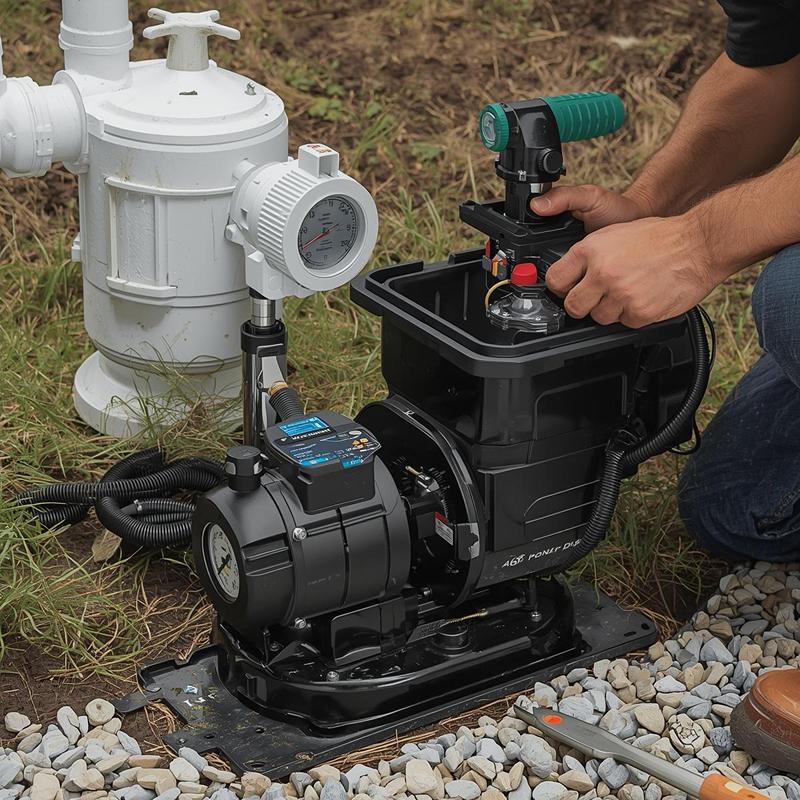
The pump pulls water from the skimmers and main drain, pushes it through the filter and heater, and sends it back through the returns. Every other piece of equipment depends on that flow.
When the pump weakens, water stops turning over. Chlorine spreads unevenly, debris settles, the heater may shut down and algae gets an opening, especially in warm weather.
A pump problem is rarely just a pump problem for long. Catching it early keeps a small repair from becoming a green pool or a failed motor.
KNOW THE WARNING SIGNS
Most pool pump problems show up in one of six ways. Each symptom can have more than one cause, which is why the diagnosis matters.
Air in the pump basket, a pump that runs dry or water that never fills the lid usually means an air leak on the suction side, a low water level or a clogged line.
Water under the pump often comes from a worn shaft seal, a cracked housing or failing O-rings. A leaking seal can let water reach the motor bearings.
A pool pump that suddenly gets loud may have worn motor bearings, debris in the impeller or cavitation from restricted suction.
Humming without spinning often points to a failed capacitor, a seized motor or an impeller jammed with debris.
No power, a tripping breaker or a blank variable-speed display can involve wiring, the motor, the drive or the controls. Electrical faults need professional attention.
Weak returns, a hot motor or a pump that shuts off on its own can come from clogged baskets, a blocked impeller, restricted plumbing or a failing motor.
PUMP SYSTEM EXPERIENCE
Residential pools use a few main types of pump, and each fails in its own way. We match the repair to the equipment on your pad.
These pumps run at one or two fixed speeds. They are simple and common on older equipment pads across North Atlanta.
Most repairs involve the parts that wear with use, from seals to capacitors to bearings.
✓
Shaft seal and O-ring leaks
✓
Capacitor and start-up failures
✓
Worn or noisy motor bearings
Variable-speed pumps use a drive and onboard controls to change speed through the day. They save energy but add electronics to diagnose.
When a variable-speed pump shows an alarm, won’t hold its schedule or stops communicating with automation, the fault can sit in the drive, the motor or the settings.
✓
Drive or display errors and alarms
✓
Programming and schedule problems
✓
Automation communication faults
The motor turns the impeller that moves the water. Heat, moisture and age are its main enemies.
Pool pump motor repair can mean replacing bearings or a capacitor, or replacing the motor while keeping a housing that is still sound.
✓
Overheating and thermal shutdown
✓
Seized or hard-starting motors
✓
Water damage from a failed seal
HOW WE FIND THE PROBLEM
Replacing parts until something works is expensive. We test first so the repair fixes the actual cause.
We start with what you have noticed: noise, leaks, prime, error codes or changes in flow, plus the pump’s age and model.
We look at water level, skimmer and pump baskets, the lid O-ring and suction plumbing for air leaks and blockages.
We confirm the pump is getting the right power and signals, including the capacitor, timer, drive and automation settings where you have them.
Depending on the fault, that includes the impeller, diffuser, shaft seal, O-rings, housing and motor bearings.
We tell you what failed, what the repair involves and whether repairing the pump still makes sense compared with replacing it.
REPAIR OR REPLACE?
Repair is usually the better value when the pump housing and motor are sound and the failure is a replaceable part, such as a shaft seal, O-ring, capacitor, impeller or bearings.
Replacement may make more sense when:
✓
The motor has burned out and the pump is near the end of its life
✓
The housing or volute is cracked
✓
Repairs keep coming back
✓
Parts are no longer available for the model
✓
An older single-speed pump could be replaced with a more efficient variable-speed model
Sometimes a pool pump motor replacement keeps a good pump in service for years. Other times a new pump is the smarter spend. We explain both options honestly.
LOCAL PUMP DEMANDS
North Atlanta summers mean long run times, and spring pollen, fall leaves and storm debris fill skimmer and pump baskets fast. A clogged basket or impeller starves the pump of water and makes it run hot.
Keeping baskets clear and catching early signs like noise or air in the pump basket helps the pump get through the busiest months without a breakdown.
UNDERSTANDING YOUR PUMP
A pump that won’t prime or keeps losing prime is one of the most common pool pump problems. It usually means the pump is pulling in air instead of water.
Common causes include:
✓
Low pool water level at the skimmer
✓
A cracked or worn pump lid or lid O-ring
✓
Loose or cracked suction-side fittings and valves
✓
Clogged skimmer baskets, pump baskets or impeller
✓
A stuck skimmer weir or blocked suction line
✓
A worn shaft seal letting air in
Running a pump dry can damage the shaft seal and overheat the motor within minutes. If your pump will not prime after you check the water level and baskets, turn it off and request service.
THE SYSTEM WORKS TOGETHER
A clogged or damaged filter can make a healthy pump look weak. If the filter is the cause, Pool Filter Repair or cleaning may restore flow without touching the pump.
Heaters shut down when flow drops. A pump problem often shows up first as a heater error, which is why we check both. See Pool Heater Repair for heater faults.
Wrong schedules, a failed timer or a closed valve can look like a pump failure. We rule these out before recommending pump parts.
HELP YOUR PUMP LAST
Most pump failures start small: a basket left full, a lid O-ring drying out, water sitting low in the skimmer. Over time those put strain on the seal and motor.
Routine pool pump service and repair go hand in hand. Clean baskets, a proper water level and a technician who hears the pump every week catch problems early. Weekly service does not replace a proper diagnostic when something has already failed.
If you would like help looking after the whole pool, our weekly service covers baskets, water care and equipment checks.
WHY ACT EARLY?
Steady circulation keeps chlorine moving and algae out.
Fixing a leaking seal early keeps water out of the motor bearings.
Testing first means you only pay for the part that failed.
A clear diagnosis shows whether repair or replacement is the better value.
WHEN TO CALL YARDSPRING POOLS
Request pool pump repair if:
✓
Your pump won’t prime or keeps losing prime
✓
You see water leaking under the pump
✓
The pump is grinding, screeching or humming
✓
It won’t turn on or trips the breaker
✓
Water flow at the returns is weak
✓
The motor feels hot or shuts off on its own
Tell us the pump brand, its age and any error on the display if you know them. Please turn the pump off if it is running dry, and don’t open the motor or electrical connections yourself.
THE YARDSPRING POOLS APPROACH
YardSpring Pools treats pool pump repair service as part of the whole circulation system. We check suction, power, controls and the pump itself before recommending anything.
Then we explain what we found in plain language. If a seal, capacitor or motor needs replacing, we tell you which one and why. If the pump has reached the end of its life, we say so and walk you through the options.
NORTH ATLANTA PUMP REPAIR
YardSpring Pools provides residential pool pump repair along our North Atlanta service routes, including communities in and around:
Availability depends on your address, scheduling and the pump involved. Send us your details and we will confirm service.
POOL PUMP REPAIR FAQ
Can pool pumps be repaired?
Yes. Most pool pump problems, including leaking seals, failed capacitors, clogged impellers and worn bearings, can be repaired. Replacement is worth considering when the housing is cracked, the motor has failed on an older pump or parts are no longer available.
Is it worth repairing a pool pump?
Usually, if the pump is in good overall condition and the failed part is replaceable. If repairs keep recurring or the repair cost is close to a new pump, replacement is often the better value.
How much does it cost to repair a pool pump?
It depends on the pump type, the failed part and whether it is a single-speed or variable-speed model. We diagnose the pump first and explain the repair and its cost before any work begins.
What are common pool pump problems?
The most common are loss of prime, leaks from the shaft seal or O-rings, noisy bearings, a pump that hums but won’t start, tripped breakers and weak flow from clogged baskets or impellers.
Why won’t my pool pump prime?
Usually because it is pulling air. Check the water level and baskets first. If it still won’t prime, the lid O-ring, suction fittings or shaft seal may be leaking air and need service.
Why is my pool pump so loud?
Grinding or screeching often means worn motor bearings. Rattling can mean debris in the impeller or cavitation from restricted suction. A sudden change in sound is worth checking before the motor fails.
Why is my pool pump leaking?
Leaks usually come from a worn shaft seal, O-rings or a cracked housing or fitting. A leaking seal should be fixed quickly because water can reach the motor.
Do you repair variable-speed pool pumps?
Yes. We diagnose drive errors, alarms, programming problems and motor faults on variable-speed pumps, as well as single-speed and two-speed pumps.
Do you offer pool pump repair near me?
YardSpring Pools serves homeowners along our North Atlanta routes, including the communities listed above. Send us your address to confirm availability.
GET YOUR WATER MOVING
If your pump won’t prime, is leaking or sounds wrong, tell us what you are seeing. YardSpring Pools will diagnose the problem and explain the best way to fix it.
Tell us where your pool is and what the pump is doing. A photo of the pump label or display helps us prepare.
Prefer to talk?
All fields are required unless marked optional.
Service availability will be confirmed based on your address and scheduling.