SALT WATER POOL SYSTEMS
Low chlorine, salt warnings or thinking about switching to salt? We can help.
YardSpring Pools provides salt water pool system installation, saltwater conversions, salt cell cleaning and salt system repair throughout North Atlanta. We check your salt cell, water chemistry and equipment to find the right next step.
Tell us what you’re noticing or what you’d like to change, and we’ll help you decide whether your pool needs a cleaning, a repair, a new cell or a full salt system.
Salt System Installation
💧
Saltwater Conversions
💧
Salt Cell Cleaning
💧
Salt System Repair
💧
Salt System Installation
💧
Saltwater Conversions
💧
Salt Cell Cleaning
💧
Salt System Repair
💧
HOW SALT SYSTEMS WORK
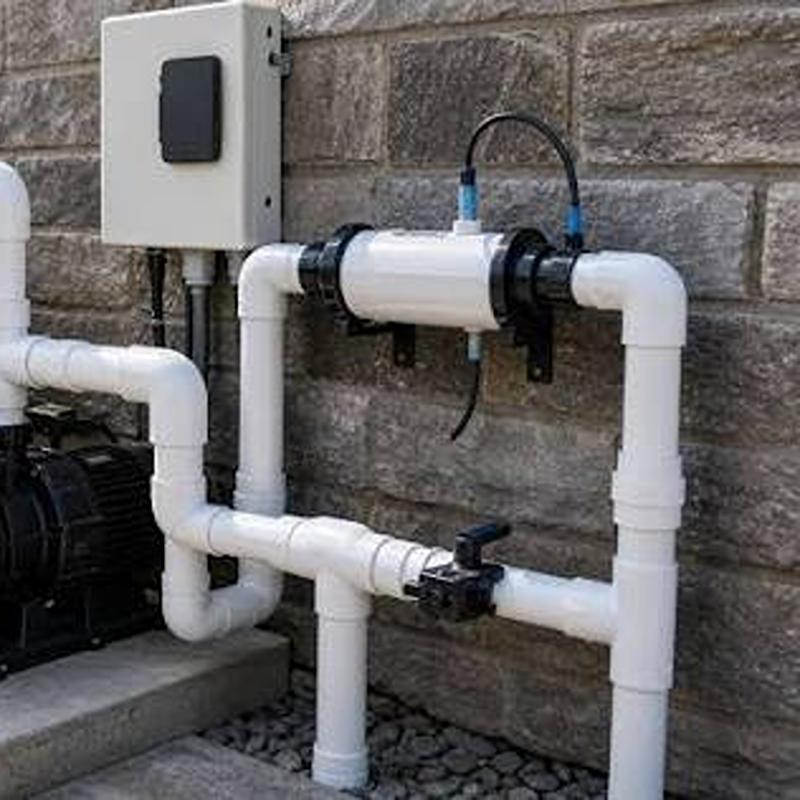
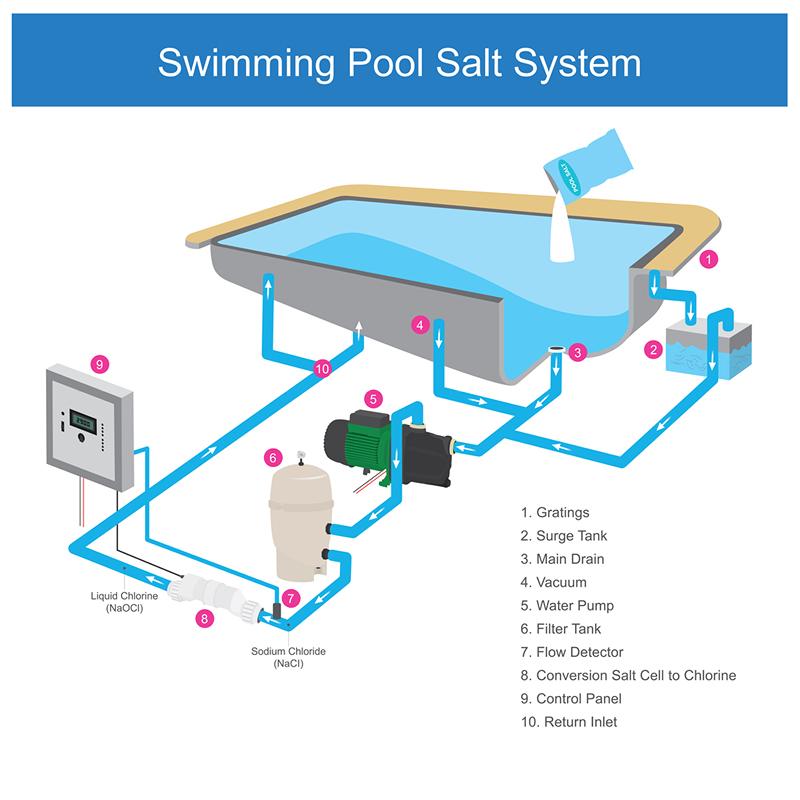
A salt water pool system, also called a salt chlorine generator or salt water chlorinator, makes chlorine for you. Water passes through a salt cell, which uses electricity to turn dissolved salt into chlorine.
That means a salt pool is still a chlorine pool. The difference is that chlorine is produced steadily at the equipment pad instead of being added by hand, and the water is far less salty than the ocean.
When the cell, controls and water chemistry are all in good shape, a salt system keeps chlorine levels steady with less day-to-day effort. When one part slips, chlorine output drops fast.
SALT SYSTEM WARNING SIGNS
If the water keeps turning cloudy or green even though the system is running, the cell may not be producing enough chlorine.
Low salt, check cell and inspect cell warnings that won’t clear usually point to a dirty cell, a sensor problem or a cell nearing the end of its life.
White, crusty scale on the cell plates reduces chlorine production and can shorten the cell’s life.
If the system shows no flow or won’t produce chlorine while the pump is running, the flow switch, circulation or wiring may need attention.
Salt cells wear out over time. An older cell that no longer holds chlorine even when clean often needs to be replaced.
If you’re tired of adding chlorine by hand, a saltwater conversion can make chlorine for you.
SALT SYSTEM SERVICES
A saltwater conversion adds a salt chlorine generator to your existing pool. We check your pool’s finish, equipment and electrical setup, size the system to your pool, add salt to the right level and program the output.
Popular salt systems include Pentair IntelliChlor and Hayward AquaRite. We recommend a system that fits your pool and any automation you already have.
Salt cells have a limited lifespan. When a cell stops producing enough chlorine even after cleaning, pool salt cell replacement is usually the fix.
We confirm the replacement cell is compatible with your control system and pool size before installing it.
Low output, error codes and no-flow warnings can come from the cell, the flow switch, sensors, the control board, power supply or simply low salt.
We test each part of the system so you replace only what has actually failed.
OUR PROCESS
We test salt, chlorine, pH and stabilizer levels. Many salt system problems start with water chemistry, not equipment.
We remove and inspect the cell for scale, debris and wear, and check whether it’s still producing chlorine the way it should.
We check the flow switch, sensors, control board, power and pump run time, since the cell only makes chlorine while water is moving through it.
Depending on what we find, we clean the cell, replace a failed part, replace the cell or install a new salt system.
We set the output for your pool and season, balance the water and explain how to keep the system running well.
CLEANING OR REPAIR?
Not sure which you need? Tell us what the control panel is showing and request a salt system check.
Salt cell cleaning removes calcium scale from the cell plates so the system can produce chlorine efficiently again. It’s routine maintenance, and it’s often the first fix for low output.
Use the cleaning method your cell’s manufacturer recommends. Cleaning too often or too aggressively can shorten a cell’s life.
Request Salt Cell Cleaning ↗Salt system repair addresses failed parts such as flow switches, sensors, control boards or a worn-out cell. A cell that’s clean but still won’t produce chlorine usually needs replacing.
Warning lights can look the same either way. Testing the water and the cell tells us which one you need.
LOCAL POOL CONDITIONS
North Atlanta summers bring heat, heavy swim use and sunlight, which all increase chlorine demand. A salt system often needs higher output during those months to keep up.
Heavy rain can dilute salt levels, and many salt cells produce less chlorine or shut off entirely when the water gets cold. Output settings need adjusting as the seasons change.
When the pool isn’t holding chlorine, the season is one factor to check alongside salt level, cell condition and circulation, not the only explanation.
IS SALT RIGHT FOR YOU?
Many homeowners like salt pools because chlorine stays more consistent, there are fewer chlorine jugs to handle, and the water often feels softer.
A saltwater conversion isn’t right for every pool. Salt can be hard on some natural stone, metal fixtures and older finishes over time, pH tends to rise and needs regular attention, and the cell will need replacing eventually. We’ll look at your pool before recommending it.
UNDERSTANDING THE SYMPTOMS
Low output can come from low salt, a scaled or worn cell, a low output setting, short pump run times or high chlorine demand.
Test the water and inspect the cell before raising the output or adding more chlorine.
A salt reading that doesn’t match a water test can point to a dirty cell or a faulty sensor. Rain, splash-out and draining can also lower salt levels.
We confirm the actual salt level with a water test before adding salt, since too much salt is hard to remove.
Flow errors can mean the pump isn’t running, the flow switch has failed, a valve is closed or air is in the system.
The cell won’t make chlorine without flow, so circulation has to be checked first.
Salt systems run on electricity. Turn off power to the system before removing the cell, and don’t open the control box or power center yourself. Electrical problems need professional attention.
Calcium scale builds up on the cell plates over time, especially when pH and calcium run high. Heavy scale cuts chlorine production.
A cell that’s clean, has the right salt level and good flow but still won’t produce chlorine has usually reached the end of its life.
THE SYSTEM WORKS TOGETHER
A salt cell only produces chlorine while the pump is moving water through it. Pump run time, flow and the control system all affect how much chlorine your pool gets.
Many salt systems also work with Pool Automation, so output and pump schedules can be managed together. Routine Weekly Pool Service helps catch low salt, rising pH and scale before they turn into bigger problems.
INSIDE THE SALT SYSTEM
We check the parts that matter for your system and the problem you’re seeing, so the recommendation is specific.
Plates are checked for scale, debris and wear that reduce chlorine output.
A failed flow switch or sensor can stop chlorine production even when the pump is running.
The control board and power supply run the cell and display warnings. Faults here can look like a cell problem.
Inaccurate salt or temperature readings can trigger false warnings or reduce output.
The cell needs steady flow to work. Short run times or weak circulation mean less chlorine.
Salt pools tend to push pH up. High pH and calcium speed up scale on the cell.
WHEN TO CALL YardSpring Pools
Request help if chlorine won’t hold, a warning light won’t clear, the cell is scaled or you’re thinking about converting to salt.
Share what the control panel shows and the system brand if you know it. You don’t need to remove the cell or open the control box to request service.
THE YardSpring Pools APPROACH
YardSpring Pools looks at the salt cell, controls, circulation and water chemistry together. That helps separate a simple cleaning or salt adjustment from a failed part or a cell that needs replacing.
We explain what we find and recommend the right path, whether that’s cleaning the cell, repairing the system, replacing the cell or converting your pool to salt.
North Atlanta SALT SYSTEM SERVICE
YardSpring Pools provides salt water pool system installation, conversions, cleaning and repair along North Atlanta service routes, including communities in and around:
Availability depends on your address, scheduling and the equipment involved. Share your details so we can confirm the right service.
SALT SYSTEM FAQ
How does a salt water pool system work?
Water passes through a salt cell that uses electricity to turn dissolved salt into chlorine. The system makes chlorine steadily at the equipment pad instead of you adding it by hand.
Is a salt water pool chlorine-free?
No. A salt pool is still a chlorine pool. The chlorine is simply made from salt by the system rather than added from jugs or tablets.
Is it worth converting to a salt water pool?
For many homeowners, yes. Chlorine levels stay more consistent and the water often feels softer. It depends on your pool’s finish, stone and metal features, and how you want to maintain the pool.
What are the disadvantages of a salt water pool?
Salt can be hard on some natural stone, metal fixtures and older finishes over time. pH tends to rise, the cell needs periodic cleaning, and cells eventually need replacing.
How much does it cost to convert a pool to salt water?
It depends on the system, your pool size and whether any equipment or electrical work is needed. We provide an estimate after looking at your pool and equipment.
How long does a salt cell last?
Several years, often around three to seven, depending on the model, run time, water chemistry and how the cell is maintained.
How often should a salt cell be cleaned?
Inspect the cell every few months and clean it when you see scale, following the manufacturer’s instructions. Cleaning more than needed can shorten its life.
Why does my salt system say low salt?
It may really be low, often after heavy rain or draining. It can also be a dirty cell or a faulty sensor. Test the water before adding salt.
Do you offer salt system service near me?
Service is available along YardSpring Pools’s North Atlanta routes, subject to location, scheduling and equipment. Send us your address and salt system details to check availability.
GET HELP WITH YOUR SALT SYSTEM
Whether chlorine won’t hold, a warning light keeps coming on or you’re ready to switch to salt, tell us what’s going on. YardSpring Pools can check the system and recommend the right service.
Salt water pool system installation, conversions and repair throughout North Atlanta.
Share your service address and what you’re noticing or planning. The salt system brand, control panel messages and photos help us understand the request before discussing the next step.
Prefer to talk?
All fields are required unless marked optional.
Availability and the appropriate service will be confirmed after reviewing your request.