POOL FILTER SAND REPLACEMENT
Short backwash cycles or cloudy water? Old filter sand may be the reason.
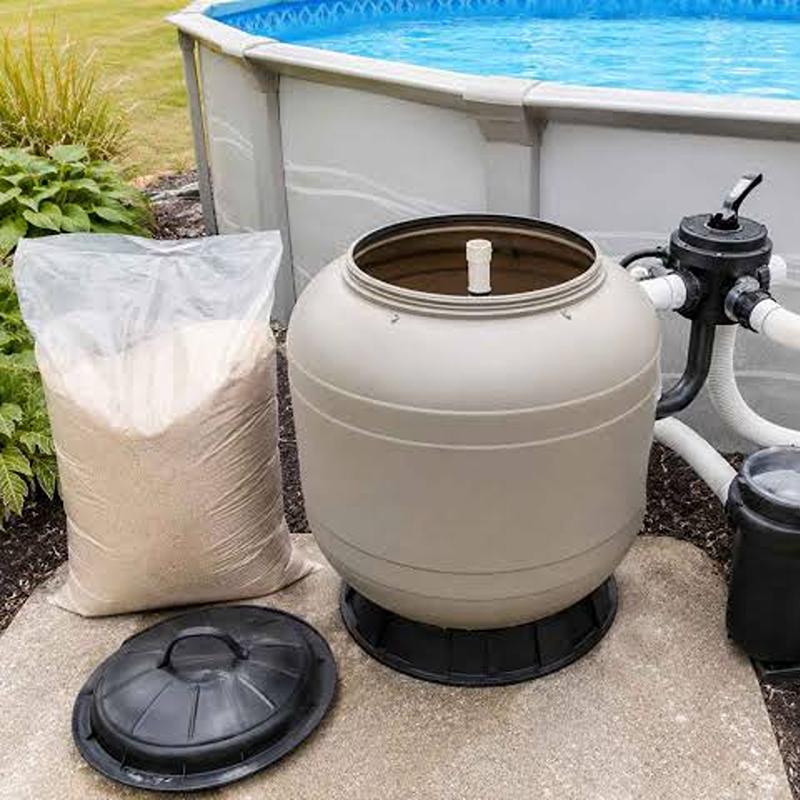
YardSpring Pools provides pool filter sand changes throughout North Atlanta. We remove the worn-out sand, inspect the laterals and standpipe, refill the filter with the right amount of fresh media and get it back in service.
Tell us how long it’s been since the sand was changed and what you’re noticing, and we’ll help you decide whether your filter needs new sand, a repair or a different fix.
Filter Sand Replacement
💧
Lateral & Standpipe Checks
💧
Correct Sand Type & Amount
💧
Filter Restart & Pressure Check
💧
Filter Sand Replacement
💧
Lateral & Standpipe Checks
💧
Correct Sand Type & Amount
💧
Filter Restart & Pressure Check
💧
HOW SAND FILTERS WORK
A sand filter cleans pool water by pushing it through a deep bed of filter sand. The sharp, jagged edges of each grain trap dirt and debris as the water passes through.
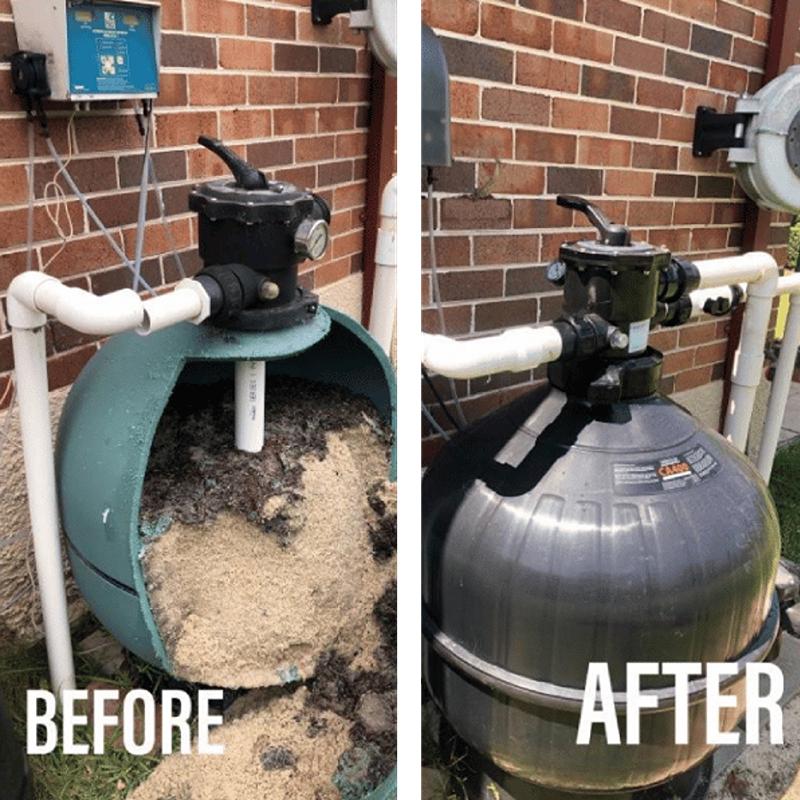
Over the years, those grains wear smooth, clump together and collect oils and debris that backwashing can’t fully remove. The sand stops filtering as well, even when the filter looks fine from the outside.
Pool filter sand replacement restores the filter bed so the filter can do its job again. It’s also the best time to inspect the parts inside the tank.
SAND FILTER WARNING SIGNS
If pressure climbs back up soon after backwashing, the sand may be clogged, clumped or worn out.
When the water stays hazy even though the chemistry is balanced, the filter may not be catching fine particles anymore.
Most sand filters need new sand every few years. If you don’t know when it was last changed, it’s worth checking.
Oils, calcium and debris can bind sand into clumps or a hard crust, which lets water channel around the filter bed.
Sand at the returns or on the pool floor usually points to a broken lateral or standpipe. That’s a repair to handle along with the sand.
After a bad algae bloom or heavy debris, the sand can hold onto contaminants that backwashing won’t clear.
SAND FILTER SERVICE
We drain the filter, remove the old sand, clean out the tank and refill it with the type and amount of sand listed for your filter.
Standard pool filter sand, usually #20 silica sand, is the most common choice. Using the wrong size or too much or too little sand can hurt filtration.
Laterals at the bottom of the tank are the fingers that hold the sand in. They crack with age, and a sand change is the best time to find and replace them.
We also check the standpipe, multiport valve and O-rings, since these parts affect how well the filter seals and backwashes.
Some sand filters can use alternative media, such as filter glass, instead of sand. It’s important to use only media your filter’s manufacturer approves.
We’ll let you know whether an alternative media is an option for your filter and how it compares with standard sand.
HOW WE DO IT
We turn off the pump and power, drain the filter and remove the multiport valve so the tank can be opened safely.
The old sand is removed and the inside of the tank is cleaned. We inspect the laterals and standpipe for cracks or damage.
Damaged laterals or seals are replaced, and the standpipe is protected so sand can’t get into it while refilling.
We add the right amount of the correct sand for your filter model, then reinstall the valve with sealed connections.
We backwash and rinse the new sand, restart the system, check for leaks and record the new clean pressure reading.
BACKWASH OR SAND CHANGE?
Not sure which you need? Tell us how often you’re backwashing and when the sand was last changed.
Backwashing reverses the flow through the filter to flush out trapped debris. It’s routine maintenance, and it’s usually the right step when pressure rises and the sand is still in good shape.
Backwash when pressure rises above the filter’s normal clean reading, following your filter’s instructions.
Explore Pool Filter Cleaning ↗A sand change replaces sand that’s worn smooth, clumped or contaminated. When backwashing no longer brings pressure down for long, the sand is usually due.
If backwashing isn’t working like it used to, a sand change is often the next step.
LOCAL POOL CONDITIONS
North Atlanta pools deal with heavy spring pollen, fall leaves, red clay and storm runoff. All of it ends up in the filter, and sand filters in busy backyards can wear out faster.
If you’re backwashing much more often during pollen season, it’s a good time to check whether the sand is still working well.
Seasonal debris is one reason a filter struggles, but not the only one. Worn sand, broken laterals and circulation problems should be checked too.
SAND CHANGE OR NEW FILTER?
A sand change makes sense when the filter tank and valve are in good condition and only the sand is worn out.
If the tank is cracked, the valve keeps failing or the filter is undersized for your pool, replacing the whole filter may be the better value. See Pool Filter Installation for new filter options.
UNDERSTANDING THE SYMPTOMS
Old sand loses its sharp edges and can’t trap fine particles well, so the water may stay hazy even with balanced chemistry.
Check chemistry and circulation too. Cloudy water isn’t always a filter problem.
When pressure jumps back up soon after backwashing, the sand may be clogged, clumped or channeling.
A sand change usually brings back longer runs between backwashes.
Sand in the pool usually means a broken lateral or standpipe, or the wrong size sand. New sand alone won’t fix it.
We replace the damaged parts during the sand change. See Pool Filter Repair for other filter problems.
Sand filters operate under pressure. Turn off the pump before touching the valve or lid, and don’t open the filter while it’s running or pressurized.
Water leaking around the multiport valve can mean a worn spider gasket or O-ring. These are often replaced during a sand change.
Without regular changes, sand can harden into a crust or clumps that let water bypass most of the filter bed.
THE SYSTEM WORKS TOGETHER
The pump pushes water through the sand bed, and the multiport valve controls how it flows. A problem that looks like old sand can start with the pump, valve or plumbing.
If we find another equipment issue during a sand change, we’ll explain it and recommend the right service. Routine Weekly Pool Service also helps keep an eye on filter pressure between sand changes.
INSIDE THE SAND FILTER
A sand change is the best time to inspect the parts inside and around the tank.
Worn, smooth or clumped sand is removed and replaced with the correct type and amount.
Cracked or broken laterals let sand into the pool and are replaced as needed.
The standpipe is checked for cracks and protected while new sand goes in.
Worn spider gaskets and O-rings can cause leaks and poor backwashing.
An accurate gauge is needed to set the new clean pressure reading.
The tank and lid are checked for cracks or damage before the filter goes back into service.
WHEN TO CALL YardSpring Pools
Request a sand change if you’re backwashing more often, the water won’t stay clear, sand is showing up in the pool or you don’t know when the sand was last changed.
Share your filter brand and model if you know them, and send a photo of the filter label if you can. You don’t need to open the filter or remove the valve yourself.
THE YardSpring Pools APPROACH
YardSpring Pools doesn’t just swap the sand and leave. We check the laterals, standpipe, valve and seals while the filter is open, so a hidden problem doesn’t send new sand into your pool.
We explain what we find and recommend the right path, whether that’s a sand change, a repair, alternative media or a new filter.
North Atlanta SAND CHANGES
YardSpring Pools provides pool filter sand changes along North Atlanta service routes, including communities in and around:
Availability depends on your address, scheduling and the filter involved. Share your details so we can confirm the right service.
POOL FILTER SAND CHANGE FAQ
How often should you change the sand in a pool filter?
For most pools, every three to five years, though it depends on pool use, debris and how well the filter is maintained. Frequent backwashing and cloudy water are signs it’s due sooner.
How much does it cost to change pool filter sand?
It depends on the size of the filter, the amount of sand it needs and whether laterals, the valve or gaskets need replacing. We provide an estimate after checking your filter.
What happens if you don’t change the sand?
Worn sand filters less effectively. The water can stay cloudy, pressure rises faster and you’ll backwash more often, which wastes water and chemicals.
How can I tell if my filter needs new sand?
Pressure that rises quickly after backwashing, water that won’t stay clear, clumped or crusted sand, or sand that’s several years old are all signs.
How much sand does my pool filter need?
Your filter’s label lists the type and amount of sand it needs. Using the right amount matters, since too much or too little can affect filtration.
Why is sand coming back into my pool?
Sand in the pool usually means a cracked lateral, a damaged standpipe or the wrong sand size. We find the cause and fix it during the sand change.
Can I use glass instead of sand?
Some filters can use alternative media such as filter glass. Use only media approved by your filter’s manufacturer. We can tell you what your filter allows.
Do I still need to backwash after a sand change?
Yes. Backwashing is routine maintenance. See Pool Filter Cleaning for filter maintenance between sand changes.
Do you offer sand changes near me?
Service is available along YardSpring Pools’s North Atlanta routes, subject to location, scheduling and equipment. Send us your address and filter details to check availability.
GET YOUR FILTER WORKING AGAIN
If backwashing isn’t working like it used to or the water won’t stay clear, tell us what’s going on. YardSpring Pools can check your filter and replace the sand if it’s due.
Pool filter sand changes throughout North Atlanta.
Share your service address, your filter brand and model if you know them, and what you’ve noticed. Photos of the filter label help us plan the sand change.
Prefer to talk?
All fields are required unless marked optional.
Availability and the appropriate service will be confirmed after reviewing your request.