PROFESSIONAL FILTER DIAGNOSTICS
Fast, Accurate Pool Filter Diagnostics & Repair
A pool filter that leaks, loses pressure or stops filtering properly can affect the entire circulation system.
YardSpring Pools provides professional pool filter diagnostics and repair for residential pools throughout North Atlanta. We service cartridge, DE and sand filtration systems and identify whether the problem requires maintenance, component repair or complete filter replacement.
Whether you’re dealing with cloudy water, abnormal filter pressure, a leaking tank or debris returning to the pool, we’ll start by identifying the cause rather than replacing parts unnecessarily.
Cartridge Filters
💧
DE Filters
💧
Sand Filters
💧
Professional Diagnostics
💧
Cartridge Filters
💧
DE Filters
💧
Sand Filters
💧
Professional Diagnostics
💧
YOUR FILTRATION SYSTEM
Your filter works with the pump and circulation system to capture suspended material from the water. When components are damaged or water bypasses the filtration media, the effects can extend beyond the equipment pad.
When the filter is damaged or no longer operating correctly, the problem may affect:
Water clarity
Circulation
Filter pressure
Heater operation
Sanitation
Equipment performance
But not every filtration problem means the filter itself is broken.
A dirty filter, failing pump, incorrect valve position or circulation restriction can sometimes create similar symptoms.
That is why YardSpring starts with diagnosis.
FILTER WARNING SIGNS
Leaks near the tank, lid, valve or plumbing may involve seals, connections or damaged components. The location of the leak helps guide the inspection.
A reading above or below the system’s normal baseline can indicate a restriction, circulation issue or gauge problem. The number alone does not identify the cause.
If water care is appropriate but clarity remains poor, damaged elements or internal bypass may be affecting filtration. Chemistry and circulation also need consideration.
DE, sand or other material appearing at the returns may point to damaged internal components, assembly issues or a valve problem.
Reduced water movement may involve the filter, pump, valves or plumbing. A system check helps avoid assuming that one component is responsible.
Cracks or damage to a filter housing require prompt professional attention. A pressurized housing should not be treated as a cosmetic repair.
FILTER SYSTEM EXPERIENCE
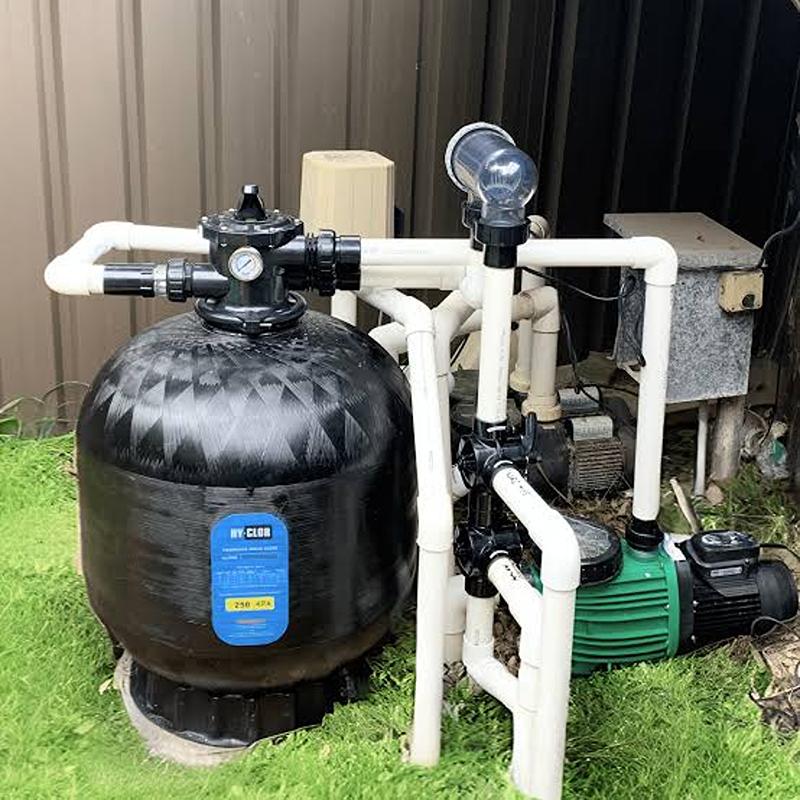
Cartridge systems use removable elements inside a housing. Concerns can involve torn or deformed elements, cracked end caps, worn seals, lids, gauges or air relief assemblies.
We evaluate the condition of the equipment to determine whether cleaning, a replacement component or a different filter is appropriate.
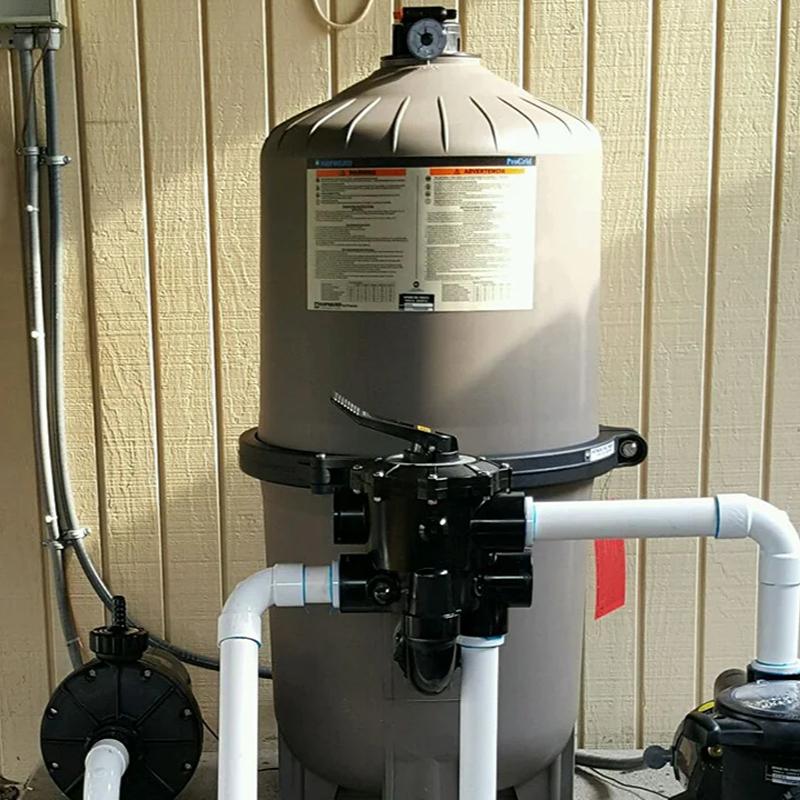
DE systems depend on internal grids or elements and filtration media. Torn fabric, cracked manifolds, damaged assemblies or valve issues may affect filtration or allow DE to return to the pool.
Inspection helps determine which components need attention and whether suitable replacement parts are available.
Sand-filter concerns may involve multiport valves, laterals, standpipes, leaks or filtration performance. Sand entering the pool can point to an internal problem rather than a routine need for fresh media.
The appropriate service depends on the condition of both the filter and its internal components.
FIND THE ACTUAL PROBLEM
We evaluate visible equipment conditions, including leaks, damage, plumbing, valves and signs of reduced circulation.
Pressure readings are considered alongside pump behavior and water flow, with attention to the system’s normal operating conditions.
Where appropriate, internal components are inspected after the system has been made safe for service. The parts involved depend on the filter type and the concern being investigated.
We determine whether accumulated material, worn media or a damaged component is contributing to the problem. Not every filtration concern calls for replacement parts.
We explain the findings and recommend maintenance, repair, replacement or another equipment service based on condition, compatibility, parts availability and practicality.
CLEANING OR REPAIR?
Not sure which you need? Tell us what has changed and request a diagnostic visit.
Cleaning addresses accumulated dirt, pollen, oils and organic material. It may be the appropriate service when buildup is restricting filtration and the equipment is otherwise functioning correctly.
Methods depend on the filter type; sand-filter maintenance differs from cleaning removable cartridges or DE elements.
Explore Pool Filter Cleaning ↗Repair addresses damaged or failed components, such as seals, valves, grids or manifolds. A damaged tank may require replacement rather than a repair.
Symptoms can overlap with maintenance needs. Inspection helps determine which service fits the condition of the system.
LOCAL FILTRATION DEMANDS
Seasonal pollen, tree debris and storms can increase the amount of material entering North Atlanta pools. That added load may make maintenance needs or existing filtration concerns more noticeable.
Changes in pressure or clarity should still be evaluated in context. Debris buildup is one possibility, but damaged components or circulation issues may also contribute.
The condition of your filter, the equipment around it and recent changes in pool performance all help guide the next step. A seasonal increase in debris should not automatically be treated as the only explanation for a leak, loss of flow or filtration problem.
REPAIR OR REPLACE?
A replaceable seal or internal component may allow a serviceable filter to remain in use. Replacement may be more practical when the tank is damaged, critical parts are unavailable or failures keep recurring.
We also consider whether the filter fits the circulation system and how repair costs compare with an appropriate replacement. Age is one factor, but condition and the nature of the failure matter too.
UNDERSTANDING THE SYMPTOMS
Higher pressure can indicate increased resistance, including loaded filter media, valve issues or a restriction on the return side. Readings should be compared under similar operating conditions and checked against the equipment’s guidance.
Cleaning may be appropriate, but a pressure increase alone does not prove that the filter is dirty or damaged.
Low readings may involve pump suction, low water level, clogged baskets, air entering the system, plumbing restrictions or an inaccurate gauge. Pump settings also affect readings.
Evaluating circulation helps determine whether the filter or another component needs service.
Water may escape around seals, the lid, drain plug, gauge, air relief assembly, valve or plumbing connections. A tank leak requires particular attention because the housing operates under pressure.
The source and condition of the affected part determine whether replacement components or a replacement filter are appropriate.
Pool filters operate under pressure. Do not loosen or adjust clamps, lids or housings while the system is running or pressurized. Visible tank damage needs professional evaluation before the equipment is used again.
DE at the pool returns may involve torn elements, cracked manifolds, damaged internal parts, assembly problems or valve issues. The system needs inspection to identify how material is passing through.
Sand near the returns may indicate damaged laterals, standpipe components or another internal issue. Inspecting the cause is more useful than repeatedly changing the media without understanding why it is escaping.
THE SYSTEM WORKS TOGETHER
The pump moves water through the filter, while valves and plumbing shape the circulation path. A concern that appears at the filter may begin elsewhere in that system.
If evaluation points to another equipment issue, we can recommend the appropriate service. Routine Weekly Pool Service also provides opportunities to notice visible changes, but ongoing observation does not replace dedicated diagnostics.
INSIDE THE FILTER SYSTEM
Inspection focuses on the parts relevant to your filter and the issue reported. Finding visible wear or damage helps guide a specific recommendation.
Tears, deformation or deterioration can affect filtration and allow material to bypass the media.
Cracks or damaged connections may interfere with the intended path of water through the filter.
Worn or damaged sealing surfaces can contribute to leaks at accessible connections or housings.
Inaccurate readings or damaged fittings complicate assessment and may need attention for proper operation.
Depending on filter type, these parts may contribute to leaks, improper flow or media returning to the pool.
Damage to pressure-containing housings requires assessment for replacement, not an assumption that a patch will resolve it.
WHEN TO CALL YardSpring Pools
Request help if your filter is leaking, pressure or flow has changed, material is returning to the pool or a previous cleaning has not resolved the concern.
Share the symptoms and any equipment details you already know. You do not need to open the filter, adjust valves or dismantle equipment to request service.
THE YardSpring Pools APPROACH
YardSpring Pools evaluates pressure, circulation, visible leaks and equipment condition in context. That helps distinguish routine maintenance from a damaged component or a concern elsewhere in the system.
We explain the findings and recommend the appropriate path, whether that means cleaning, replacing a component, evaluating another system or considering a new filter.
North Atlanta FILTER REPAIR
YardSpring Pools provides residential filter diagnostics and repair along North Atlanta service routes, including communities in and around:
Availability depends on your address, scheduling and the equipment involved. Share your details so we can confirm the appropriate service.
POOL FILTER REPAIR FAQ
Does my filter need cleaning or repair?
Buildup may call for cleaning; damaged components may require repair or replacement. Symptoms can overlap, so inspection helps determine the appropriate service. Explore Pool Filter Cleaning for routine maintenance information.
Why is my filter pressure high or low?
High pressure can indicate increased resistance. Low pressure may involve circulation, pump behavior or a gauge issue. Readings need to be interpreted alongside flow and operating conditions rather than used as a diagnosis on their own.
Why is my pool filter leaking?
Leaks can come from seals, fittings, valves, gauges, lids or the tank itself. The source determines the work needed. Do not adjust clamps or open the housing while the system is running or pressurized.
Why is DE or sand returning to the pool?
Damaged internal components, assembly concerns or valve issues may allow filter media into the pool. The relevant parts differ between DE and sand systems, so inspection is needed to identify the cause.
Can a cracked filter be repaired?
Some damaged components can be replaced. Cracks in a pressure-containing tank or lid require professional evaluation for replacement; they should not be treated as a routine patching job.
Do you service cartridge, DE and sand filters?
YardSpring Pools evaluates these common residential filter types within its service capabilities. The available solution depends on the specific equipment, condition and replacement-part availability.
When is replacement better than repair?
Replacement may make sense when the tank is damaged, parts are unavailable, failures recur or repair is no longer practical compared with a suitable replacement.
Does YardSpring Pools also clean filters?
Yes. Pool Filter Cleaning addresses deeper filtration maintenance. If buildup is the issue rather than a mechanical failure, that may be the appropriate service.
Can you provide filter repair at my address?
Service is available along YardSpring Pools’s North Atlanta routes, subject to location, scheduling and equipment requirements. Send us your service address and filter details to check availability.
GET HELP WITH YOUR FILTER
If your filter is leaking, pressure has changed or filtration is not working as expected, tell us what you are noticing. YardSpring Pools can evaluate the system and recommend the appropriate service.
Residential pool filter diagnostics and repair throughout North Atlanta.
Share your service address and the symptoms you have noticed. Equipment details and photos can help us understand the request before discussing the next step.
Prefer to talk?
All fields are required unless marked optional.
Availability and the appropriate service will be confirmed after reviewing your request.