POOL SURFACE RESTORATION
Remove stubborn stains and scale and bring back a brighter, cleaner pool surface.
Stains, scale and years of wear can make a pool look old even when the water is perfectly balanced. When brushing and chemicals no longer bring the surface back, an acid wash may be the next step.
YardSpring Pools provides professional pool acid washing for plaster pools throughout North Atlanta. We check your pool’s finish and stains first, then drain, acid wash, neutralize, refill and rebalance the water so the pool is ready to swim.
Plaster Pool Acid Washing
💧
Stain & Scale Removal
💧
Drain, Refill & Start-Up
💧
Water Balancing
💧
Plaster Pool Acid Washing
💧
Stain & Scale Removal
💧
Drain, Refill & Start-Up
💧
Water Balancing
💧
WHAT IS ACID WASHING A POOL?
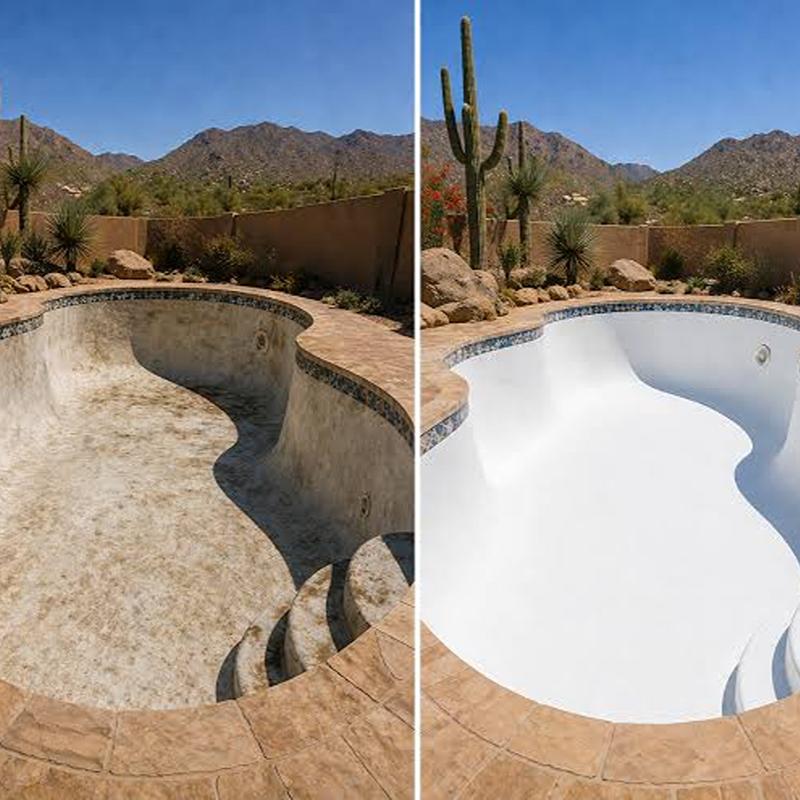
An acid wash is a deep cleaning for the pool’s interior surface. The pool is drained, and a diluted acid solution is applied to the plaster to strip away a very thin top layer along with the stains and scale in it.
What’s left is a fresher layer of plaster underneath. For many pools, that means a noticeably brighter, cleaner-looking surface without the cost of resurfacing.
Because it removes a little of the finish every time, acid washing is a restoration service, not routine maintenance. It should be done only when the surface actually needs it.
SIGNS YOUR POOL NEEDS AN ACID WASH
Not every stain needs an acid wash. These signs usually mean the surface has moved past what brushing and water chemistry can fix.
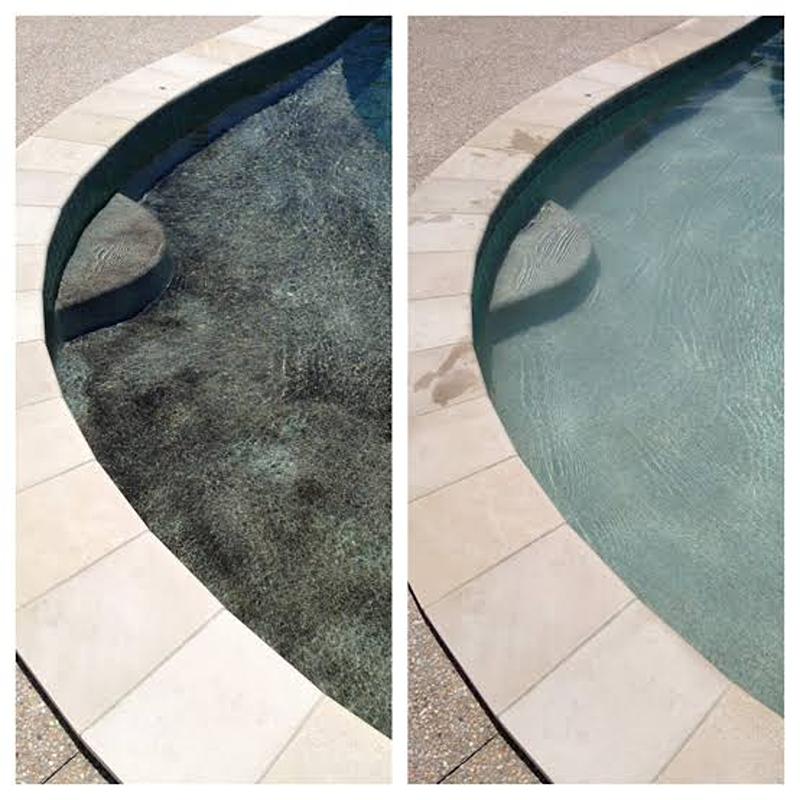
Dark or discolored areas that stay put after brushing and chemical treatment often sit in the top layer of the plaster.
Black, green or brown staining can remain in the plaster long after an algae problem is cleared up.
White, crusty calcium deposits at the waterline or across the surface can build up when water chemistry runs high over time.
Iron, copper and other metals can leave brown, green or blue stains. Some respond to targeted treatment; others need a deeper clean.
Leaves, pollen and red clay can leave marks, especially in pools that sat closed or neglected for a season.
If the whole pool looks dingy or gray compared with how it used to look, a fresh layer of plaster can make a big difference.
POOL SURFACES
Acid washing works best on certain finishes. We confirm what your pool is made of before recommending it.
Traditional white plaster, or marcite, is the finish most often acid washed. A careful acid wash can remove stains and scale and expose a cleaner layer of plaster.
Plaster has a limited thickness, so the number of acid washes it can take over its life is limited too.
✓
Removes surface stains and scale
✓
Brightens dull plaster
✓
Best on plaster in good condition
Pebble and other aggregate finishes can sometimes be acid washed, but they need a gentler, more careful approach.
The wrong strength or technique can damage the finish, so we evaluate the surface first and recommend the right treatment.
✓
Evaluated before treatment
✓
Gentler, controlled approach
✓
Alternatives when acid isn’t right
Vinyl liner and fiberglass pools should not be acid washed. Acid can damage these surfaces.
If you have a vinyl or fiberglass pool with staining, we can talk about stain treatments made for those surfaces instead.
✓
Not a candidate for acid washing
✓
Surface-safe stain treatments
✓
Honest advice on your options
OUR PROCESS
An acid wash is more than spraying acid on the walls. Each step protects your pool and the people working on it.
We look at the finish, the type of staining and the plaster’s condition, and check site conditions such as recent heavy rain before planning to drain the pool.
The pool is drained carefully and the remaining debris is cleared out. Draining an in-ground pool at the wrong time can put it at risk, so timing matters.
A diluted acid solution is applied to the plaster in sections and scrubbed, then rinsed before it can eat too deeply into the surface.
The acid is neutralized, the pool is rinsed, and the wastewater is handled according to local requirements before refilling begins.
We refill the pool, clean the filter, balance the water chemistry and start up the equipment so the pool is ready for swimming again.
ACID WASH OR RESURFACING?
An acid wash is a good choice when the plaster is still smooth and in sound condition and the problem is surface staining, scale or discoloration.
Resurfacing may make more sense when:
✓
The plaster is rough, pitted or etched
✓
The finish is chipping, flaking or hollow
✓
Stains go deeper than the surface layer
✓
The pool has already been acid washed several times
✓
Bare spots or thin plaster are showing
An acid wash can’t fix a worn-out finish. If we think your pool needs more than an acid wash, we’ll tell you before any work starts.
LOCAL POOL CONDITIONS
North Atlanta pools deal with heavy spring pollen, fall leaves, red clay and storm runoff. Over time, that organic debris and dirt can leave stains that settle into the plaster.
Heavy rain and wet ground can also affect when it’s safe to drain an in-ground pool. We plan acid washes around local conditions rather than just the calendar.
HOW OFTEN?
How often should you acid wash a pool? Only when it needs it. Most well-maintained plaster pools go several years between acid washes, and some rarely need one.
Timing depends on:
✓
How well water chemistry is maintained
✓
How much debris and pollen the pool collects
✓
Whether the pool has had algae problems
✓
The age and thickness of the plaster
✓
How many times it has been acid washed
✓
Whether staining responds to other treatments
Because every acid wash removes some plaster, we recommend it only when lighter options won’t do the job.
CHOOSING THE RIGHT TREATMENT
Uses a diluted acid to remove a thin layer of plaster. Best for stubborn stains, scale and dull plaster that other methods can’t clean.
Uses a strong chlorine solution on the drained surface. Often used for organic and algae staining, and it doesn’t remove plaster the way acid does.
Draining, cleaning and refilling without a surface treatment. Useful for heavy debris or very high dissolved solids when the plaster itself is in good shape.
KEEP IT CLEAN
An acid wash gives you a fresh start, but good weekly care is what keeps stains from coming back.
Balanced water chemistry helps prevent calcium scale and metal staining, and regular brushing and debris removal keep leaves and pollen from marking the new surface.
If you want help keeping the pool clean and balanced after an acid wash, explore our weekly pool service.
BENEFITS OF A POOL ACID WASH
Removes stains and scale that brushing and chemicals can’t reach.
Exposes a fresher layer of plaster for a cleaner, whiter look.
A smoother, cleaner surface is easier to brush and keep clean.
For plaster in good condition, it restores the look for much less than resurfacing.
WHEN TO CALL YardSpring Pools
Request an acid wash estimate if:
✓
Stains won’t come out with brushing or chemicals
✓
Algae has left dark marks behind
✓
Calcium scale has built up on the surface
✓
Your plaster looks dull, gray or dingy
✓
You’re reopening a pool that sat neglected
✓
You’re getting the pool ready to sell or entertain
Tell us about the staining and your pool’s finish if you know it. Photos of the stains help us recommend the right treatment. Also see Pool Filter Cleaning for a clean filter at start-up.
THE YARDSPRING POOLS APPROACH
YardSpring Pools doesn’t recommend an acid wash just because a pool looks stained. We look at the finish, the type of stain and the plaster’s condition first.
Sometimes a chlorine wash, a stain treatment or better water balance is the right answer. When an acid wash is right, we do it carefully and return the pool balanced and ready to swim.
North Atlanta POOL ACID WASH
YardSpring Pools provides pool acid washing along our North Atlanta service routes, including communities in and around:
Availability depends on your pool’s finish, site conditions, weather and scheduling. Send us your details and we’ll confirm.
POOL ACID WASH FAQ
What is acid washing a pool?
Acid washing is a deep cleaning for plaster pools. The pool is drained, and a diluted acid solution removes a thin top layer of plaster along with stains and scale, exposing a fresher surface.
How much does it cost to acid wash a pool?
It depends on the pool’s size, the finish, how heavy the staining is and what’s involved in draining and refilling. We provide an estimate after looking at your pool.
How often should you acid wash a pool?
Only when it needs it. Well-maintained plaster pools often go several years between acid washes. Because each one removes some plaster, it shouldn’t be routine maintenance.
Is it better to acid wash or chlorine wash a pool?
It depends on the stain. Chlorine washes often work well on organic and algae staining, while acid washing is better for scale and stubborn stains in the plaster. We recommend the gentler option when it will do the job.
Will an acid wash remove all pool stains?
Not always. It works best on surface stains and scale. Deep stains, some metal stains and worn plaster may need a different treatment or resurfacing.
Can you acid wash a pebble, vinyl or fiberglass pool?
Pebble and aggregate finishes can sometimes be acid washed with a careful approach. Vinyl liner and fiberglass pools should not be acid washed.
How long does a pool acid wash take?
The acid wash itself is usually done in a day, but draining and refilling add time. Refill time depends on your pool’s size and water pressure.
Is acid washing bad for my pool?
Done correctly and only when needed, no. Each acid wash removes a small amount of plaster, so too many acid washes or a harsh technique can shorten the finish’s life.
Do you offer pool acid wash service near me?
YardSpring Pools provides pool acid washing along our North Atlanta routes, including the communities listed above. Send us your address to confirm availability.
BRING BACK A BRIGHTER POOL
If stains and scale have taken over your pool’s surface, YardSpring Pools can check your finish and recommend whether an acid wash, a lighter treatment or another option is the right way to bring it back.
Tell us about your pool’s surface and the staining you’re seeing. Photos of the stains help us recommend the right treatment.
Prefer to talk?
All fields are required unless marked optional.
Service availability will be confirmed based on your address and scheduling.